

Alternatives to sending gear in. And why they don't work.
Over the years, many different ideas have been proposed to avoid having to send gear to our facility. Unfortunately, they all suck. Here’s why:
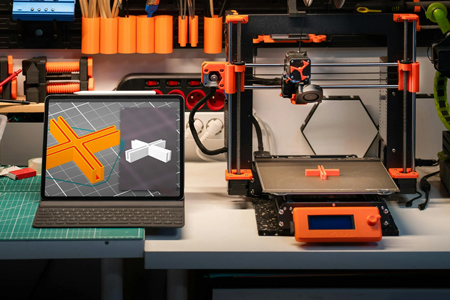
“3D printed replica”
Why this seems like such a great idea.
In 2009, FDM patents went into the public domain and with it came the largest hype machine ever created. 3D printers were going to change everything. Need an extra cup for a wine tasting? Print it with a 3D printer. Door handle broke? 3D print a new one. Want a custom shoe to fit your left foot? 3D printing to the rescue. With all the 3D promises the notion to “duplicate” objects is a perfectly rational idea.
Why it doesn’t work.
Aside from the high cost to yield a geometrically comparable part to the original and long production time typically measured in hours, the part itself will rarely be 100% geometrically accurate to the item at hand. Even if a part could be produced which simulated the original, it would still lack the surface friction, texture, and center of gravity of the original — all features which we take into account when making a part.
 “Download it off the web”
Why this seems like such a great idea.
If you were internet-savvy in the 90’s, you could download books with Netscape Navigator. Later on you could download music with Napster, and eventually entire films could be downloaded via legal means and some illegal. Certainly if we can download all these fine works of art, we should be able to download just about anything, right?
Why it doesn’t work.
There is a big difference between downloading intangible goods such as media and trying to download a tangible good such as an automobile component. Sometimes manufacturers will share CAD files but they are limited to simple drawings that provide a general overview of the part dimensions. Its virtually impossible to acquire the real CAD files the manufacturer uses to create their parts as that is highly-guarded information that would ordinarily only be used for their prototyping and manufacturing purposes.
 “Arrange the original manufacture to have them lend the equipment to us”
Why this seems like such a great idea.
The customer can contact the manufacturer to send an exact duplicate of the item to our facility. They will pack it up and ship it out. Then we can use that for proper measurements. The simplicity of the process is so easy that it becomes a foregone conclusion.
Why it doesn’t work.
In reality, manufacturers are extremely busy with a variety of priorities from research and design, supply chain management, production, fulfillment and all while trying to maintain razor-thin margins. While it’s tempting to believe they have folks on standby ready to lend out items for no benefit, the truth is that most manufacturers will not operate in that capacity. Even when a rare manufacturer is able to deliver this kind of service, the priority is often shifted to last place and the lead time can become crippling.
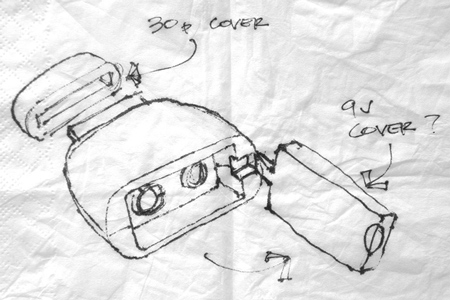 “Provide the measurements via email”
Why this seems like such a great idea
If a ruler can tell give us a measurement, then measuring an object should be trivial.
Why it doesn’t work
Our team of professionals generally take hours to properly measure a piece of equipment. A single item may have close to 100 angles and bezier curves to achieve the safety, tolerance and quality that make our products stand out. We use a variety of measurement devices to accurately measure each contour. Calipers, angle finders, lasers, levels, and radius gauges are necessary to get proper dimensions for our standards. Even with all these tools and over a decade of experience, we are still required to test fit every component to ensure a proper fit. Minor corrections are to be expected during our prototyping process and testing the component along with the foam is critical to the process.
 “Find a rental company to supply the equipment”
Why this seems like such a great idea.
Rental houses are literally in the business to supply equipment on a daily basis.
Why it doesn’t work.
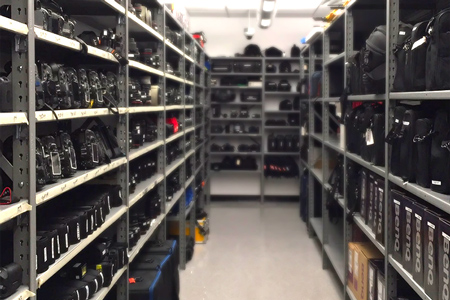
Rental houses are for-profit businesses and will generally associate a cost with borrowing their gear. There can also be a risk of error, as a rental house may not be aware of the exact components that are needed for the project, or the slight variations that may exist between different versions of the same equipment. There’s no way to know for sure whether we’ve received the correct equipment.
 “3D laser scanning”
 “Photo measurements”
 “Tracing using chalk and a large sheet of cardboard”
 “Sending another foam insert that is close enough”